

TL;DR
- Conservatories, dormers, and lean-to structures present unique flat roofing challenges due to their integration with existing buildings
- Many homeowners are replacing traditional conservatory roofs with insulated flat roof systems for year-round usability
- Dormer flat roofs face harsh exposure at roof level and need quality materials to match main roof lifespan
- Lean-to roofs must integrate properly with existing walls to prevent water tracking into the main structure
- EPDM rubber roofing is ideal for all three applications, offering 30–50 year lifespan and excellent weather performance
- Costs typically range from £400–£1,200 for dormers and lean-tos, £1,500–£4,000+ for conservatory roof replacements
- Professional installation is essential—these structures require precise integration with existing buildings
Some flat roofing applications demand particular expertise. Conservatories, dormers, and lean-to structures don’t just need waterproofing—they need careful integration with existing buildings, attention to thermal performance, and solutions that address their specific challenges.
These three structure types share common themes: they attach to existing buildings, they’re often afterthoughts in property development, and when their roofing fails, the problems affect both the structure itself and the main house.
This guide covers flat roofing for conservatories, dormers, and lean-to roofs across South Wales, explaining the unique requirements of each and helping you understand your options for repair, replacement, or upgrade.
Conservatory Flat Roofing
Conservatory roofing has evolved dramatically. What was once exclusively glazed or polycarbonate territory now increasingly features solid flat roof systems.
The Conservatory Roof Problem
Traditional conservatory roofs—whether glass or polycarbonate—create uncomfortable spaces:
Summer: Greenhouse effect makes the room unbearably hot, often unusable during warm weather.
Winter: Poor insulation means the space is too cold to use without expensive heating.
All year: Noise from rain on polycarbonate, glare issues, fading furniture, and wasted floor space that cost significant money to build.
Many South Wales homeowners have conservatories they rarely use because the roof makes the space impractical.
Solid Flat Roof Conversions
Converting a conservatory to a solid flat roof transforms usability.
What’s involved:
- Removing existing glazed or polycarbonate roof panels
- Installing new structural support (if required)
- Building insulated roof deck
- Applying waterproof membrane (typically EPDM)
- Adding internal ceiling finish
- Installing appropriate lighting
Benefits:
- Comfortable temperature year-round
- Quiet during rain
- Usable as genuine living space
- Reduced heating costs
- Potential for integrated lighting
- Often adds more value than it costs
Conservatory Roof Conversion Requirements
Structural considerations: Existing conservatory frames must support additional weight. Most modern conservatories can accommodate lightweight conversion systems, but assessment is essential.
Building regulations: Solid roof conversions typically require building regulations approval. This ensures structural adequacy, thermal performance, and fire safety compliance.
Planning permission: Usually not required for like-for-like replacement or approved conversion systems. Check with your local planning authority if uncertain.
Hybrid Conservatory Roofs
Some conversions retain glazed elements while adding solid sections:
Perimeter solid roof with central glazing: Provides insulation benefits while maintaining natural light through roof windows or a central lantern.
Partial conversion: Solid roof over part of the conservatory with glazing retained elsewhere.
These hybrid approaches balance thermal improvement with light retention.
Conservatory Flat Roof Costs
| Conservatory Size | Roof Area | Conversion Cost Range |
|---|---|---|
| Small (2.5m × 3m) | ~8m² | £1,500–£2,500 |
| Medium (3m × 4m) | ~12m² | £2,200–£3,500 |
| Large (4m × 5m) | ~20m² | £3,500–£5,500 |
| Very large (5m × 6m) | ~30m² | £5,000–£7,500 |
These costs include structure assessment, new roof build-up, EPDM membrane, insulation, internal ceiling, and basic lighting. Premium finishes, extensive structural work, or complex configurations add cost.
Conservatory Roof Materials
EPDM rubber roofing: The preferred choice. Excellent waterproofing, long lifespan, handles integration with existing frames well.
GRP fibreglass: Alternative option offering good durability. May be specified by some conversion system manufacturers.
Single-ply membranes: Occasionally used, particularly with specific prefabricated systems.
For most conservatory conversions across South Wales, EPDM provides the best combination of performance and value.
Dormer Flat Roofing
Dormer windows bring light and headroom to loft spaces, but their flat roof sections need careful attention.
Understanding Dormer Roofs
Dormers project from the main roof slope, creating vertical windows and usable floor space within the loft. The top of most dormers features a flat or very low-pitched roof.
Types of dormers:
Flat roof dormers: The most common type, with a horizontal top and vertical front.
Pitched roof dormers: Have their own small pitched roof. Still may include flat sections.
Shed dormers: Single-slope roof, essentially flat but angled slightly.
Each type presents flat roofing requirements, whether for the entire dormer top or sections within the design.
Dormer Roof Challenges
Dormer flat roofs face particular challenges:
Exposure: At roof level, dormers experience more weather severity than ground-level flat roofs. Wind, rain, temperature extremes, and UV exposure are all intensified.
Access: Dormer roofs are harder to reach than garage or extension roofs. Scaffolding or roof access equipment is typically required.
Integration: The dormer must integrate properly with surrounding tiles or slates. The junction between flat roof and pitched roof requires careful detailing.
Size constraints: Dormer roofs are typically small, making per-square-metre costs higher due to fixed setup and detailing time.
Common Dormer Roof Problems
Failed original covering: Many dormers have original felt that has degraded. Leaks affect the loft space and potentially the room below.
Poor original installation: Loft conversions don’t always receive the same attention as main building work. Dormer roofs are sometimes installed poorly.
Integration failures: Where dormer meets main roof, problems develop at flashings and junctions.
Neglected maintenance: Out of sight often means out of mind. Dormer roofs may go years without inspection.
Dormer Flat Roof Replacement
When replacement is needed:
Process:
- Safe access established (usually scaffolding)
- Existing covering removed
- Deck inspected and repaired
- New membrane installed
- Integration with tiles/slates addressed
- Edge details completed
- All junctions sealed
Materials: EPDM is ideal for dormer roofs. Its flexibility handles thermal movement at exposed roof level, and its longevity matches or exceeds surrounding tile lifespan.
Integration details: Lead flashings or proprietary systems where dormer meets tiles. These details are critical for long-term performance.
Dormer Flat Roof Costs
| Dormer Type | Approximate Size | Cost Range |
|---|---|---|
| Small box dormer | 3–5m² | £400–£700 |
| Standard dormer | 5–8m² | £600–£950 |
| Large dormer | 8–12m² | £850–£1,400 |
| Multiple dormers | Variable | Priced individually |
Access costs (scaffolding) add £300–£600 typically. Some dormer work can be done from roof ladders, reducing this element.
Dormer Roof Lifespan
Quality EPDM on a dormer should last 30+ years—matching or exceeding when surrounding tiles might need attention. This makes rubber roofing particularly appropriate: you don’t want the dormer roof failing while the rest of the roof has decades remaining.
Lean-To Flat Roofing
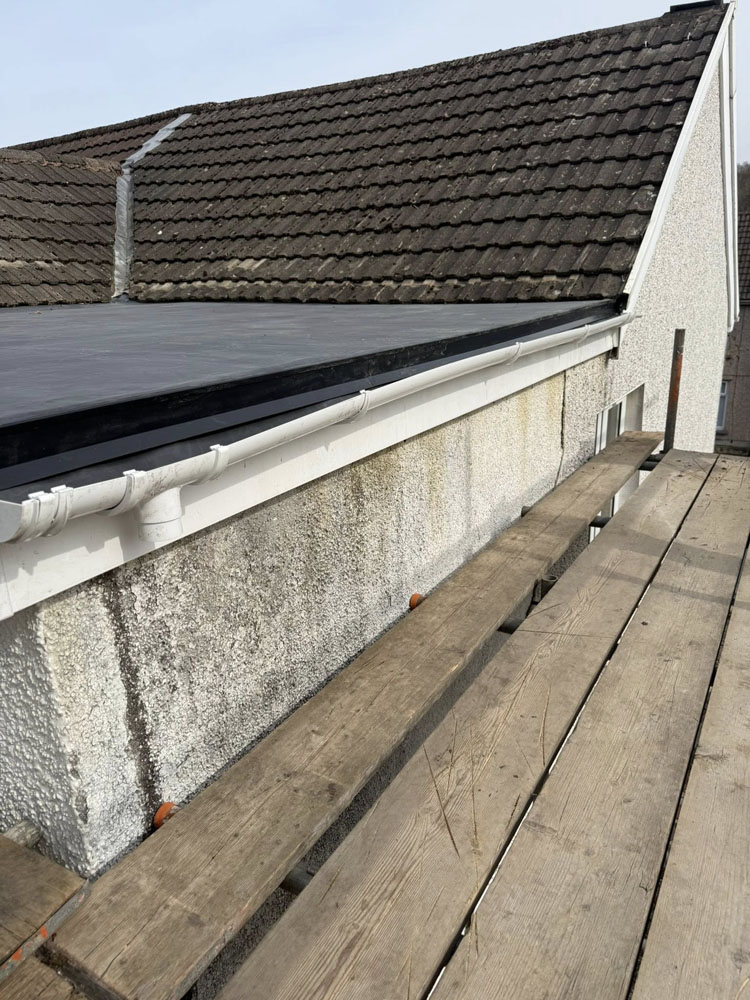
Lean-to structures attach to existing buildings with roofs sloping away from the main wall. Despite the slope, many function as flat roofs for waterproofing purposes.
What Counts as a Lean-To
Lean-to structures include:
Lean-to extensions: Single-storey additions with mono-pitch roofs against the house.
Lean-to conservatories: Conservatory designs with one side against the house wall.
Carports and covered areas: Open-sided structures providing vehicle or storage shelter.
Utility lean-tos: Small additions housing boilers, storage, or utility functions.
Covered walkways: Passages between buildings or along house walls.
The defining feature: one edge of the roof terminates against an existing wall rather than at a separate edge detail.
Lean-To Roofing Challenges
Wall abutment: Where roof meets wall is the critical junction. Water must not track into the wall or down into the structure. This requires proper upstand, flashing, and sealing.
Drainage direction: Lean-to roofs slope away from the house wall, directing water to the outer edge. Guttering at this edge must handle all roof drainage.
Existing wall condition: The wall the lean-to attaches to may have issues—old pointing, cracks, or surface problems that affect how the roof can be sealed.
Original construction quality: Lean-to structures are often built to lower standards than the main house. Roofing may need to accommodate structural imperfections.
Lean-To Roof Problems
Wall junction failures: The most common issue. Water entering where roof meets wall damages both the lean-to interior and potentially the main house wall.
Gutter overflow: If edge guttering is undersized or blocked, water overshoots during heavy rain.
Structural movement: Lean-to structures may move independently of the main building, stressing the junction.
Original felt failure: Many lean-tos have felt roofs that have reached end of life.
Lean-To Flat Roof Solutions
Replacement: Strip existing covering, repair deck, install EPDM with proper wall integration.
Repair: If covering is generally sound, junction repairs may address specific problems.
Upgrade: Improve insulation during replacement for better thermal performance.
Wall Abutment Details
Getting the wall junction right is essential:
Standard approach:
- Membrane turned up wall minimum 150mm (upstand)
- Top edge secured with termination bar fixed into wall
- Gap above bar sealed with appropriate mastic
- Lead flashing or cover flashing dressed over the junction
Alternative approaches:
- Membrane tucked into chase cut in masonry
- Membrane dressed beneath existing cladding (where possible)
- Proprietary flashing systems
Whatever method is used, the junction must remain watertight through building movement, thermal cycling, and weather exposure.
Lean-To Flat Roof Costs
| Structure Type | Typical Size | Cost Range |
|---|---|---|
| Small utility lean-to | 4–8m² | £400–£750 |
| Standard lean-to | 8–15m² | £650–£1,200 |
| Large lean-to extension | 15–25m² | £1,000–£1,800 |
| Lean-to conservatory | 10–20m² | £850–£1,600 |
These costs assume existing structure is sound. Structural repairs or modifications add accordingly.
Common Themes Across All Three
Despite their differences, conservatories, dormers, and lean-tos share important characteristics.
Integration Is Everything
All three attach to existing buildings. The junction between new roofing and existing structure determines long-term success. This is where problems develop and where quality installation makes the difference.
Whether your property is in Cardiff, Merthyr Tydfil, Aberdare, or anywhere across South Wales, proper integration with existing buildings requires experienced installers who understand these critical details.
Thermal Performance Matters
Each structure type benefits from proper insulation:
Conservatories: Insulation transforms usability entirely.
Dormers: Insulation maintains loft room comfort and prevents heat loss through the dormer.
Lean-tos: Insulation makes attached spaces comfortable and reduces heating demand.
During any flat roofing work on these structures, upgrading insulation makes sense.
Access Considerations
All three may present access challenges:
Conservatories: Usually accessible but may have garden constraints.
Dormers: Typically require scaffolding or specialist access equipment.
Lean-tos: Access varies—some straightforward, others restricted by location.
Access affects cost and scheduling. Discuss access during quotation to ensure accurate pricing.
Original Build Quality Varies
These structures are often:
- Added after original house construction
- Built to different standards than the main building
- Subject to less rigorous inspection
- More likely to have hidden problems
Professional assessment before work begins identifies issues that might otherwise cause surprises.
Choosing the Right Material
For all three structure types, material choice follows similar principles.
EPDM Rubber Roofing
Why it’s typically the best choice:
- Handles integration with existing structures well
- Flexes with building movement
- Copes with exposure (particularly important for dormers)
- Long lifespan matches investment in the structure
- Minimal maintenance suits hard-to-access locations
Considerations:
- Higher upfront cost than felt
- Requires proper installation technique
GRP Fibreglass
When it might be appropriate:
- Specified by conservatory conversion system
- Colour matching requirements
- Particularly hard surface needed
Considerations:
- Less flexible than EPDM
- Cracking risk if structure moves
- Temperature-sensitive installation
Felt Roofing
When it might be considered:
- Severe budget constraints
- Temporary structures
- Situations where longevity is secondary
Considerations:
- Shorter lifespan (10–15 years)
- Will need replacement eventually
- Poor choice for quality conservatory conversions
Our Recommendation
For conservatories, dormers, and lean-to roofs across South Wales, EPDM rubber roofing delivers the best results. Its combination of flexibility, longevity, and reliable waterproofing suits these specialist applications particularly well.
Working with Professionals
These aren’t straightforward flat roofing jobs. Professional expertise matters.
Why Professional Installation Is Essential
Integration expertise: Getting junctions right requires experience. Poor integration causes problems that affect both the structure and the main house.
Structural assessment: Professionals identify issues with underlying structure before they complicate roofing work.
Building regulations: Where regulations apply (particularly conservatory conversions), professionals ensure compliance.
Warranty protection: Professional installation includes both material and workmanship guarantees.
Access management: Proper access setup ensures safe, efficient work.
What to Look For
Relevant experience: Ask specifically about conservatory conversions, dormer roofs, or lean-to work—whichever applies to your project.
Understanding of integration: Installers should explain how they’ll handle the junction with existing structure.
Clear quotation: Detailed scope covering all elements of the work.
Appropriate warranties: Both material and workmanship guarantees with documentation.
Questions to Ask
For conservatory conversions:
- Do you assess structural capacity?
- How do you handle building regulations?
- What internal finish options are available?
- Will the conversion affect my conservatory warranty?
For dormers:
- How will you access the roof?
- How will you integrate with existing tiles/slates?
- What lifespan should I expect?
For lean-tos:
- How will you seal against the existing wall?
- What’s included in the wall junction detail?
- Will you assess the existing structure condition?
Maintenance for These Structures
Once installed, maintenance keeps these roofs performing.
Conservatory Solid Roofs
Annual checks:
- Clear debris from roof surface
- Check edge details and wall junction
- Ensure drainage is clear
- Inspect any roof windows or lanterns
As needed:
- Clean external surface if dirty
- Check internal ceiling for any staining
Dormer Roofs
Twice yearly:
- Visual check from ground or upper window
- Clear any debris accumulation
- Check visible junctions with tiles
Every few years:
- Professional inspection as part of general roof check
- Assessment of flashing condition
Lean-To Roofs
Twice yearly:
- Clear debris (often accumulates against wall)
- Check wall junction closely
- Clear gutters at roof edge
- Inspect for any movement signs
After severe weather:
- Check for damage or displacement
- Confirm drainage is functioning
Frequently Asked Questions
Can any conservatory have a solid roof conversion?
Most conservatories can accommodate lightweight conversion systems, but structural assessment is essential. Very old or lightweight structures may need reinforcement.
Do I need planning permission for a conservatory roof conversion?
Usually no, but it depends on your specific situation. Building regulations approval is typically required. Check with your local authority.
How long does a dormer roof replacement take?
Most dormer roof replacements complete in one day once access is established. Complex jobs or multiple dormers may take longer.
Will a solid conservatory roof make the room dark?
Not necessarily. Roof windows, central lanterns, or hybrid designs maintain natural light while providing insulation benefits.
Can lean-to roofing be done in sections?
Generally, complete replacement is preferable. The wall junction is critical, and piecemeal work risks compromising this detail.
How do I know if my dormer roof needs attention?
Signs include staining on dormer interior, visible deterioration from outside, failed flashing at tile junction, or any evidence of water ingress in the loft.
Summary: Specialist Flat Roofing Done Right
Conservatories, dormers, and lean-to structures need more than basic flat roofing—they need solutions that address their specific challenges and integrate properly with existing buildings.
Key principles:
- Integration with existing structure is the critical detail
- EPDM rubber roofing suits all three applications
- Professional installation ensures proper junctions and warranties
- Thermal improvement during roofing work adds significant value
- Regular maintenance catches problems early
These structures deserve the same quality attention as any part of your home. Proper flat roofing transforms them from potential problem areas into reliable, comfortable, and valuable spaces.
Expert Flat Roofing for Your Conservatory, Dormer, or Lean-To
At M&J Roofing, we provide specialist flat roofing services for conservatories, dormers, and lean-to structures across South Wales. We understand the integration requirements, thermal considerations, and detail work these structures demand.
Whether you’re converting a conservatory, replacing a dormer roof, or addressing a failing lean-to, contact us for professional assessment and clear guidance. We’ll explain your options, provide honest quotations, and deliver quality installation that protects your investment for decades.
